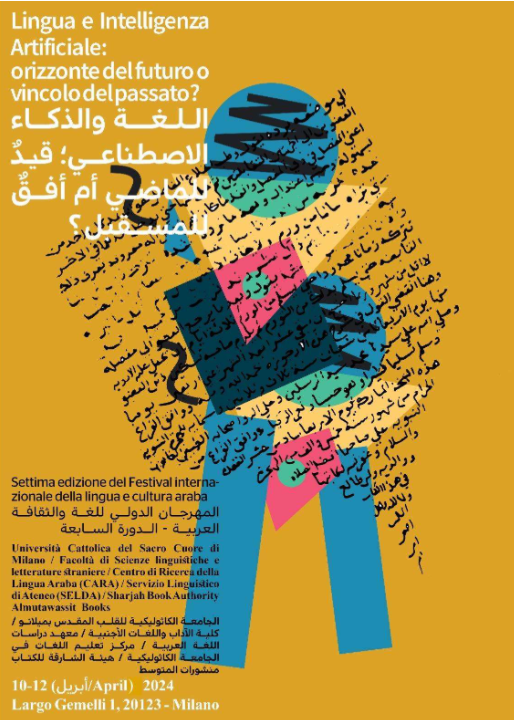
Language and artificial intelligence: horizon of the future or echo of the past?
Festival at a glance
The Festival brought together 35 participants from 18 countries, including nine Arab countries - Egypt, Iraq, Morocco, Lebanon, Syria, the United Arab Emirates, Algeria, Yemen and Palestine - as well as Turkey, which was represented for the first time. Among the Italian participants were numerous faculty members and researchers from Università Cattolica del Sacro Cuore.
Over the course of three days, linguists, philosophers, artificial intelligence and data science experts, language teaching specialists, translators, writers, poets, artists and filmmakers explored the opportunities and challenges posed by AI in the fields of language, translation, literature and the arts.
The Festival opened with a tribute to Arabic poetry, featuring the presentation of Jolanda Guardi’s new translation of the Mu‘allaqāt, followed by a poetry reading by Iraqi poet and translator Kadhim Jihad Hassan.
The scientific programme focused on a range of topics, including the challenges posed by AI to the Arabic language, algorithmic bias, language teaching, digitalisation, translation, and the relationship between artificial intelligence and creativity. Particular attention was devoted to AI’s ability to generate literary texts and artistic works, prompting reflection on its limitations when compared with human imagination, subjectivity and experience.
The discussion also extended to contemporary literature and poetry, exploring the future of creative writing, the role of the author and translator, and the meaning of originality and inspiration in the age of artificial intelligence.
The scientific programme concluded with a keynote lecture by Giovanni Gobber, focusing on the relationship between language, creativity and the hope of the unexpected, and reflecting on what artificial intelligence cannot offer.
The Festival also featured a number of cultural events, including a concert by ArabCor, the Arabic-language choir of Università Cattolica, conducted by Hani Gergi, as well as the Agorà of Arabic Books, hosted by the publishing house Almutawassit, which accompanied the audience throughout the Festival.
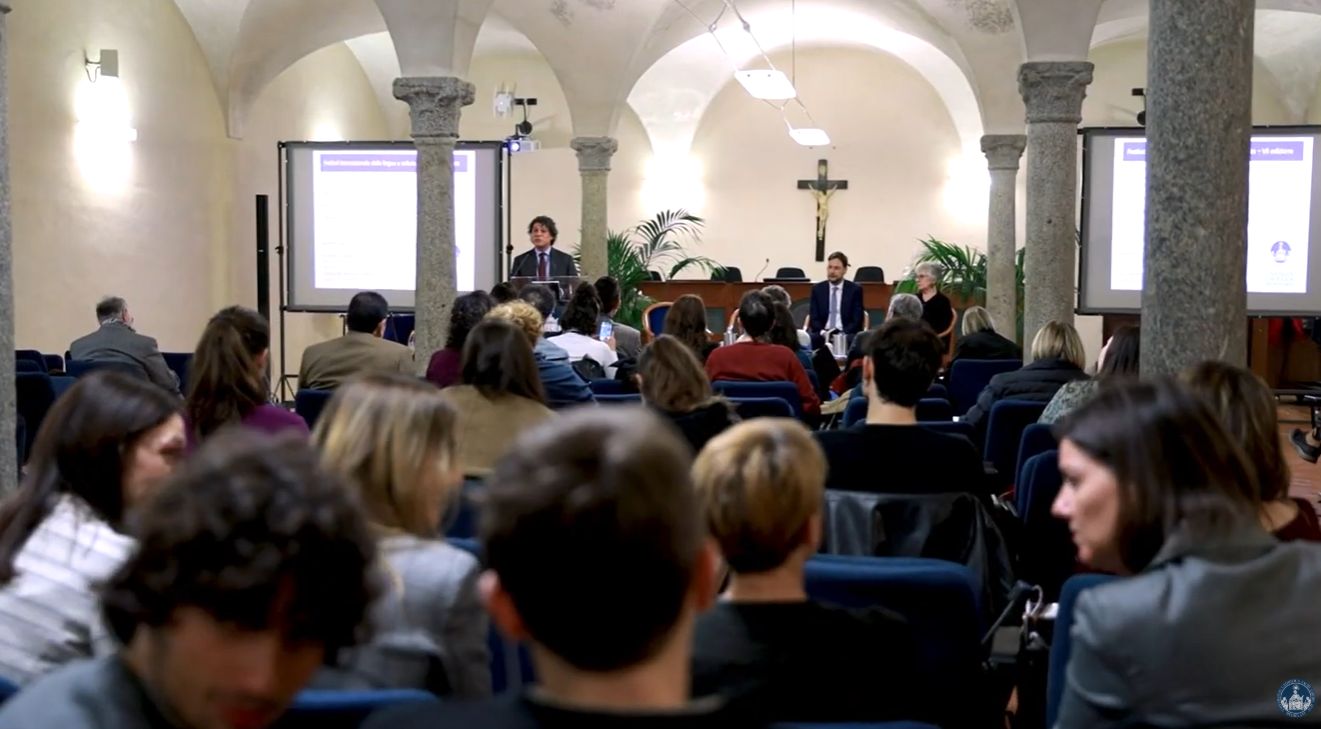
International festival of Arabic language and culture